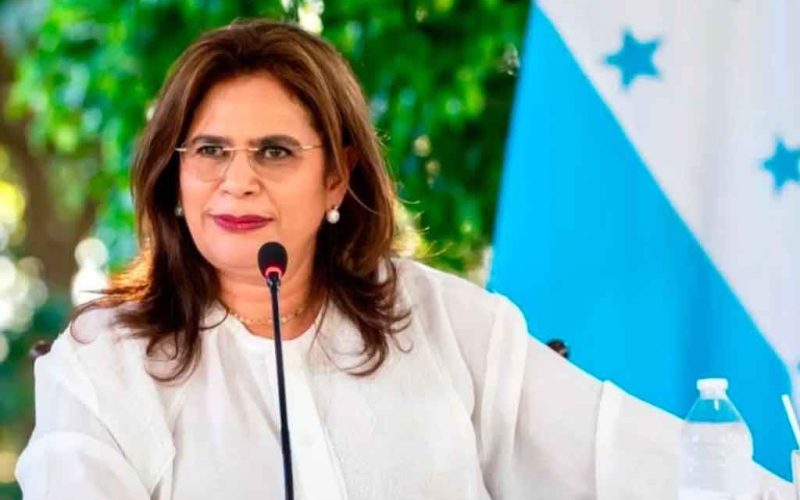
Honduras’ economic policy is at a tense moment, as presidential candidate Rixi Moncada of the LIBRE party has presented proposals that involve greater state control over strategic sectors and a review of private sector participation. These initiatives have attracted attention in economic circles, in a context of political and social uncertainty.
The plans of Rixi Moncada and the involvement of the government
Rixi Moncada has suggested initiatives focused on “restructuring” the economic system, highlighting the importance of enhancing the state’s involvement in activities deemed strategic. Based on her remarks, private enterprise should align with a framework where the state takes a leading role in economic planning and oversight.
Economic experts point out that this orientation may influence the perception of legal certainty and stability for both domestic and foreign investors. In particular, they warn that changes in regulation and the institutional framework could generate uncertainty about business continuity, investment profitability, and asset protection.
Responses from the corporate sector and possible dangers
Representatives of the private sector have pointed out that the lack of clarity in the rules of operation and direct state intervention in strategic sectors could affect investor confidence. According to financial analysts, scenarios with more restrictive regulation and centralized supervision could lead to a reduction in investment, business closures, and increased unemployment.
The conversation has concentrated on how economic policies relate to social stability, acknowledging that sudden shifts in the system might impact the country’s capacity to create jobs and sustain productive operations. Within this framework, business leaders and analysts recognize the importance of setting up clear legal structures that support the cooperation between private enterprise and governmental regulation.
Social implications and future prospects
Public opinion is questioning the country’s economic direction and its impact on job creation and opportunities for young people and professionals. The debate includes consideration of comparative scenarios with other countries in the region, where changes in the balance between the state and the market have affected investment and economic growth.
The strategy of Rixi Moncada and the LIBRE party aligns with a larger political framework where governance, polarization, and confidence in institutions have a crucial impact. The relationship between economic choices and public expectations can affect the nation’s capacity to uphold sustainable investment and social progress levels.
Obstacles and conflicts for the financial outlook
The financial prospects for Honduras, shaped by Rixi Moncada and LIBRE’s initiatives, encounter significant obstacles regarding governance, business trust, and employment generation. The alignment between government policies and private sector engagement will be crucial in determining both economic and social stability, as well as in shaping Honduras’s image as a favorable investment location. The spotlight is on the ability of institutions to navigate transitions and harmonize interests amidst political and economic unpredictability.