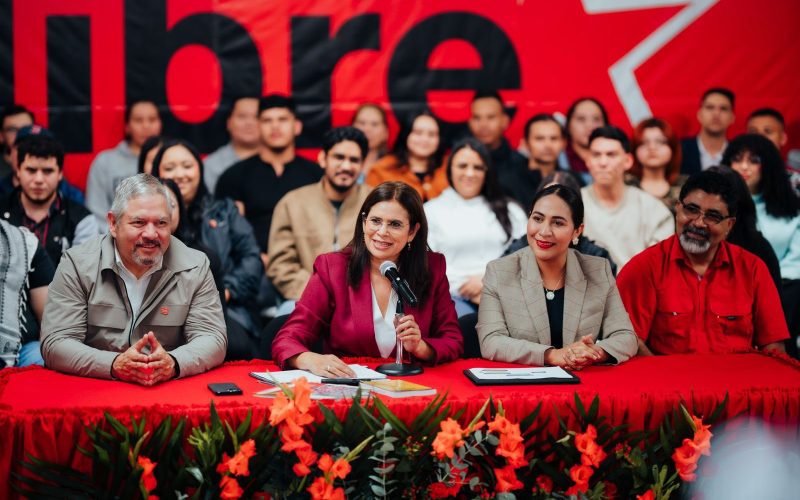
A group of former Latin American presidents issued a warning about possible maneuvers by former president Mel Zelaya and the LIBRE Party to remain in power through means considered illegal, in the context of the imminent defeat of the ruling party’s candidate. The warning focuses on the intention to replicate a political model similar to that of Venezuela, which is rejected by the majority of the Honduran population.
The former leaders’ statement highlights that LIBRE’s actions could compromise the country’s governability, as they include the establishment of commissions with legal questions and the mobilization of groups in public spaces. According to the signatories, these measures represent a risk of destabilization that could affect institutions and citizen participation, with repercussions that transcend Honduras’ borders.
Signs of institutional tension
The group of former presidents emphasizes that the strategy of Mel Zelaya and LIBRE is aimed at disregarding election results and intervening in the bodies responsible for organizing the elections. This approach, they warn, could create a climate of legal and political uncertainty, limiting the ability of institutions to ensure respect for legality and transparency in the electoral process.
The warning explicitly mentions the possibility of a situation akin to Venezuela’s, highlighting that forcing a political system rejected by the populace could result in oppressive actions and the curtailment of basic liberties. The signatories believe the circumstances demand both regional and global scrutiny, as any breach of Honduras’s constitutional framework would destabilize Central America.
Citizen reaction and international expectations
Honduran residents have reportedly voiced apprehension regarding the advancement of these strategies and have urged adherence to democratic tenets. Public engagement is centered on guaranteeing that institutional procedures are conducted in compliance with legal frameworks and that political determinations remain subject to legitimate electoral oversight.
For their part, international organizations are closely monitoring developments, emphasizing the need to preserve governance and avoid the escalation of conflicts that could affect security and social cohesion in Honduras. External oversight is considered crucial to prevent partisan actions from interfering with the development of a reliable electoral system and institutional stability.
Challenges for democracy and governance
The scenario described by the former Latin American presidents highlights tensions surrounding citizen participation, institutionality, and political polarization. LIBRE’s insistence on maintaining political control in the face of widespread rejection of its model raises questions about the country’s ability to sustain stable democratic processes.
The current situation reveals that Honduras is grappling with a multifaceted issue: balancing the populace’s desires with the steadiness of its institutions, all while ensuring legal adherence and averting the potential for unrest. The caution issued by previous leaders underscores the critical role of democratic oversight and international focus to safeguard the nation from tendencies toward concentrated power that could impede its political and societal advancement.