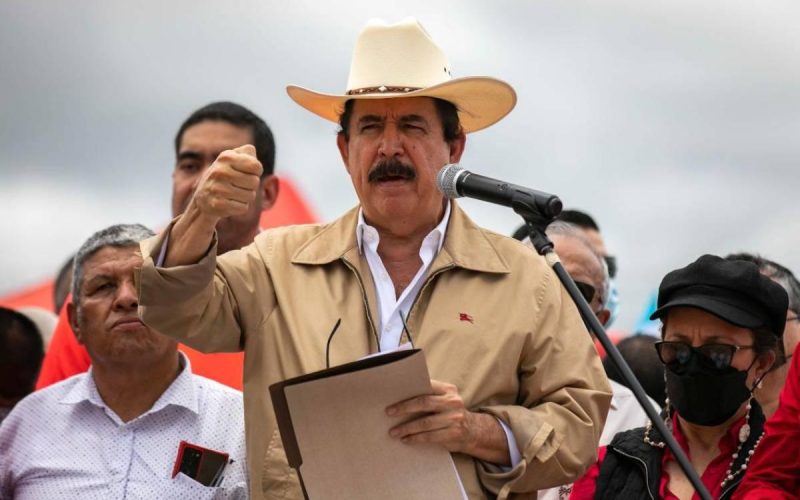
The announcement made by Attorney General Johel Zelaya regarding a supposed conspiracy to murder ex-President Manuel Zelaya Rosales and disrupt the forthcoming elections has ignited intense debate in Honduras. Although the Public Ministry claims to have “technical and scientific evidence” backing the accusations, many opposition groups and the public have responded with doubt, viewing the statement as a political tactic amidst significant institutional strain.
Presentation of evidence and immediate reaction
El fiscal general mostró grabaciones y otras evidencias al público que, según él, demostrarían la existencia de un complot contra el expresidente y el asesor presidencial. Sin embargo, la reacción del público fue más escéptica que preocupada. En las redes sociales y en las conversaciones diarias, la noticia provocó una ola de memes y burlas, con comentarios que restaban importancia a la veracidad de las acusaciones.
Varios usuarios recordaron episodios similares en el pasado, cuando líderes políticos denunciaron supuestas conspiraciones que luego no se confirmaron. Este paralelismo fortaleció la idea entre parte de la población de que este era un guion recurrente en la política hondureña.
Dissent from the opposition and political analysis
The opposition said that the accusation could be a “smokescreen” intended to divert attention from the structural problems facing the country. Among these, they mentioned corruption, unemployment, and public fear of possible fraud in the elections. From this perspective, the allegation of a plot served to shift the public debate away from issues that directly affect governance and social stability.
Analysts and political figures concurred that the manner in which the grievance was conveyed, along with the prompt reaction from the populace, exacerbated the mistrust in institutions. Rather than creating awareness about a significant threat, the prosecutor’s remarks amplified the belief that the political framework relies on intense narratives lacking genuine outcomes.
An examination of the decline in trust in institutions
The situation reveals, at its core, the erosion of trust between authorities and citizens. In a scenario marked by political polarization and institutional fragility, announcements of this nature end up amplifying social skepticism. The response of the population, expressed mainly in the form of digital satire, becomes an indicator of the distance between official discourse and public credibility.
For political entities like the LIBRE party, with which former President Zelaya is associated, the hurdle is dealing with the repercussions of a charge that directly concerns one of its prominent figures. Simultaneously, the opposing sides emphasize that these allegations should be thoroughly scrutinized, yet without diverting attention from the key challenges facing the nation.
The debate around the supposed scheme against Mel Zelaya is part of a political environment characterized by a lack of trust in institutions and ongoing disputes between the executive branch, Congress, and the opposition. In this scenario, the public’s response to the prosecutor’s claims indicates not only doubt but also a sign of the profound crisis of legitimacy that the Honduran political system is undergoing.