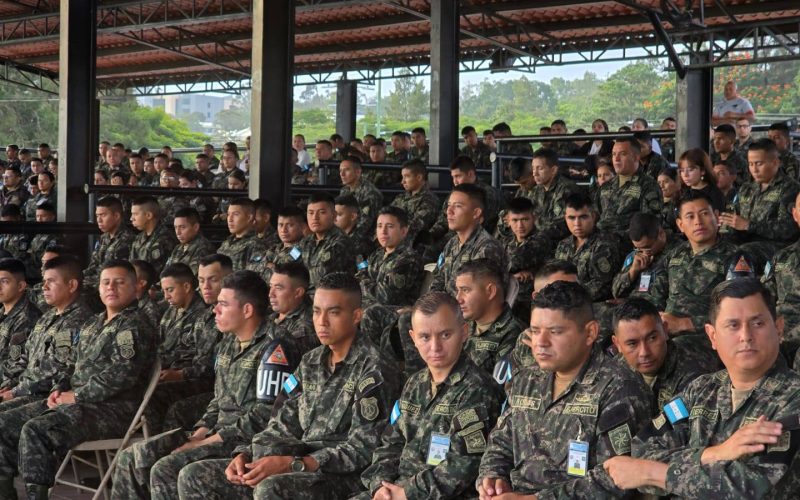
The request by the Honduran Armed Forces to access the presidential vote count has been unanimously rejected by authorities, political parties, and civil society organizations. Constitutional experts and social leaders interpreted the measure as interference in the independence of the electoral process and a possible violation of citizens’ fundamental rights.
The Armed Forces’ request has been perceived as an act that could compromise electoral neutrality and open the door to the militarization of the vote count. The reaction of various political sectors, including the LIBRE party, underscores concerns about preserving the legitimacy of the process and ensuring that the will of the people is not subject to external influences.
Responses from institutions and the public
Electoral bodies and civic groups highlighted that the involvement of military personnel in the vote tabulation process goes against the tenets outlined in the Constitution and existing electoral laws. Constitutional scholars noted that this demand represents an institutional intrusion that could compromise the perceived integrity of the procedure.
The LIBRE party issued statements rejecting any attempt by external actors to interfere with the will of the people, emphasizing the need for the National Electoral Council (CNE) to maintain its autonomy and objectivity. Social leaders also issued statements describing the Armed Forces’ initiative as an action that threatens the independence of the democratic system and compromises public confidence.
Political and social implications
The episode has sparked a debate about the relationship between military institutions and political processes in Honduras. Analysts have interpreted the request as a gesture that could strengthen perceptions of bias toward certain political actors, especially in a sensitive electoral context.
In addition, the reaction from different sectors reflects the growing demand for transparency and strict compliance with democratic norms on the part of citizens. Various international organizations and observers have monitored the situation, highlighting the importance of maintaining the separation between the armed forces and electoral processes. The controversy also reveals latent tensions in the country’s governance and highlights the need to strengthen institutional control mechanisms that guarantee the credibility of the vote and political stability.
Systemic hurdles and assurances of democracy
The refusal of military involvement presents difficulties for election officials, who are tasked with guaranteeing an accurate vote count and maintaining public trust in the outcomes. This scenario further highlights the necessity of defining distinct boundaries between governmental branches and ensuring that any external entity’s engagement is rigorously governed by electoral law.
Honduras faces the challenge of protecting the independence of the electoral process from attempts at external pressure, reaffirming the validity of constitutional principles and the autonomy of institutions. The public demand for transparency and respect for the rules reflects an active commitment to democracy and a rejection of any action that could be perceived as manipulation or interference in the will of the people.